AC Repair
Why is my AC blowing warm air?
6 minute readWritten by the Kessler technicians
Short answer
An AC blowing warm air is usually a failed capacitor, a dirty condenser coil, low refrigerant from a leak, or a thermostat set to ON instead of AUTO. Two of these you can check yourself in five minutes. The rest need a technician.
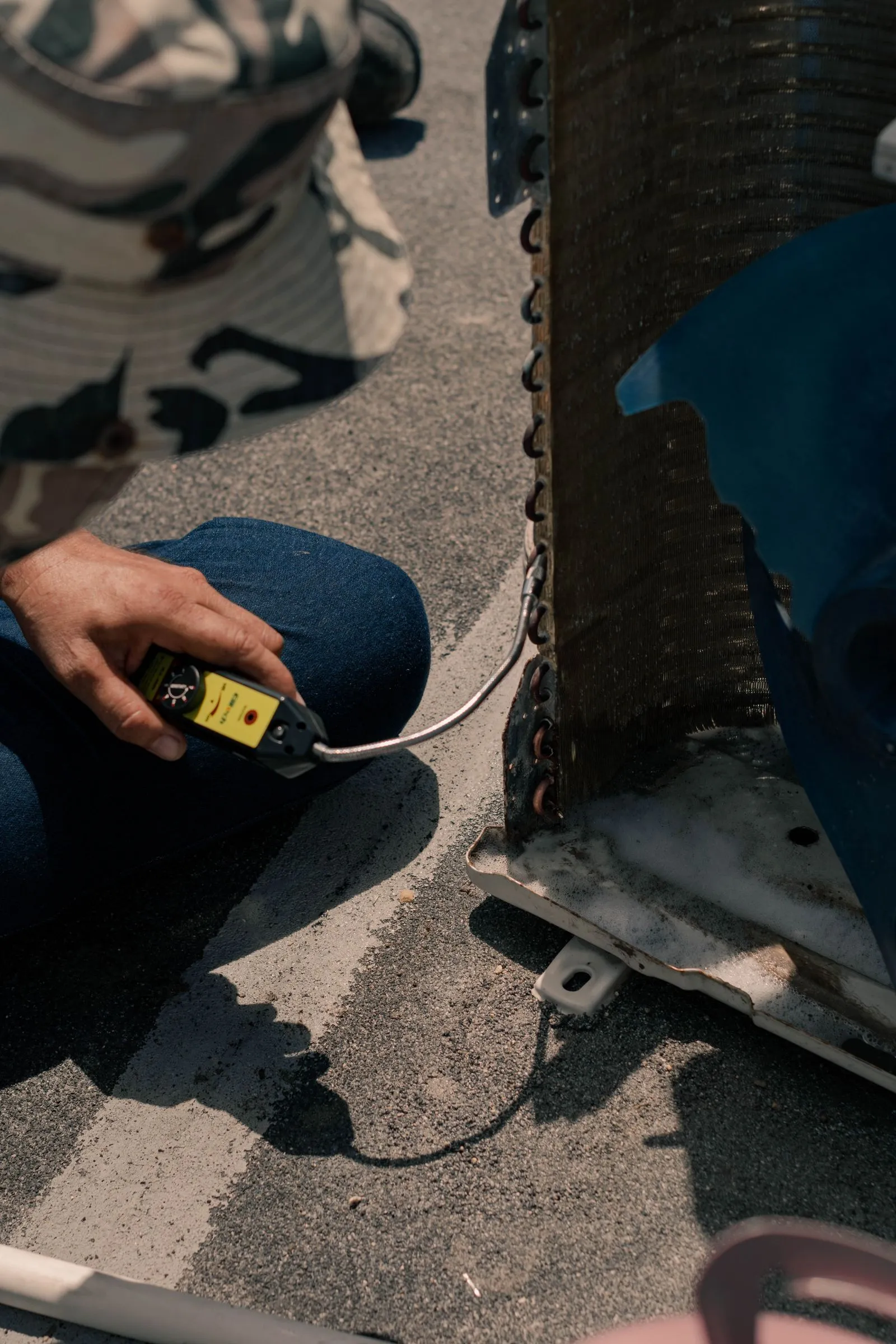
Check these two things first, before you call anyone
Set the thermostat fan to AUTO rather than ON. On ON, the blower runs continuously even when the system is not actively cooling, so you feel room-temperature air moving and assume the AC has failed. This is the single most common false alarm we get called out for, and there is no charge for feeling silly about it.
Then look at your outdoor unit. If the fan on top is not spinning while the system is calling for cool, you have narrowed it to an electrical fault, most often a capacitor. If it is spinning but the air inside is warm, the problem is more likely refrigerant or airflow.
A failed capacitor is the most common real cause
The capacitor is a small cylinder that gives the compressor and fan motors the jolt they need to start. North Carolina heat kills them faster than almost anywhere, and they are one of the cheapest parts in the system.
The tell is a humming sound from the outdoor unit with no fan movement, or a fan that starts if you nudge it with a stick through the grille. Do not do that last one with the power on.
Typical cost: $180 to $320, usually finished in one visit.
A dirty condenser coil chokes the whole system
The outdoor unit sheds heat through its coil. Cottonwood, grass clippings, dryer lint and dust pack into the fins until it cannot release heat, so the system runs and runs without cooling much, and your bill climbs.
You can see this yourself. If the fins look furry or matted, that is the problem. Rinsing gently with a hose from the inside out helps, but avoid a pressure washer, which bends the fins and makes things worse permanently.
Low refrigerant always means a leak
Refrigerant is not consumed like fuel. It circulates in a sealed loop. If you are low, it is because it escaped somewhere, and topping it up without finding the leak means paying for the same refrigerant twice.
This is worth being firm about. Any company that adds refrigerant, takes your money, and leaves without a leak search has sold you a temporary fix and a repeat visit. We search for the leak as part of the job.
Watch for: Ice on the copper line or the indoor coil often means low refrigerant or restricted airflow. Turn the system off before the ice damages the compressor.
The less obvious causes
- A clogged condensate drain trips the float switch and shuts cooling down as a safety measure. Common in attic-mounted systems.
- A tripped breaker on the outdoor unit only. The indoor blower still runs on its own circuit, so air moves but nothing cools it.
- A failed contactor, which is the relay that lets the outdoor unit start. Similar symptoms to a capacitor.
- A frozen evaporator coil from a filthy filter. Replace the filter, run the fan on ON to thaw it, then see whether it recurs.
- A compressor that has actually failed. This is the expensive one, and on a system past 12 years it usually shifts the conversation to replacement.
When it is worth calling straight away
If it is above 95 outside, if anyone in the house is elderly, an infant, or has a medical condition, or if you smell burning, do not work through a checklist. Call. Say who is in the house, because it changes how we route the job.
Otherwise, the two-minute thermostat and outdoor-fan check above will often tell you which conversation you are about to have, which makes the call shorter and the price tighter.